Ask ten homeowners why their garage door spring broke and nine will tell you 'the cold weather.' That's actually an East Coast answer. In Naples the culprit is different: it's a combination of raw cycle count, humidity-driven surface rust and undersized builder-grade springs.
Here's what's actually happening inside that coil of steel, and what you can do to add years to your next set of springs.
How a torsion spring actually works
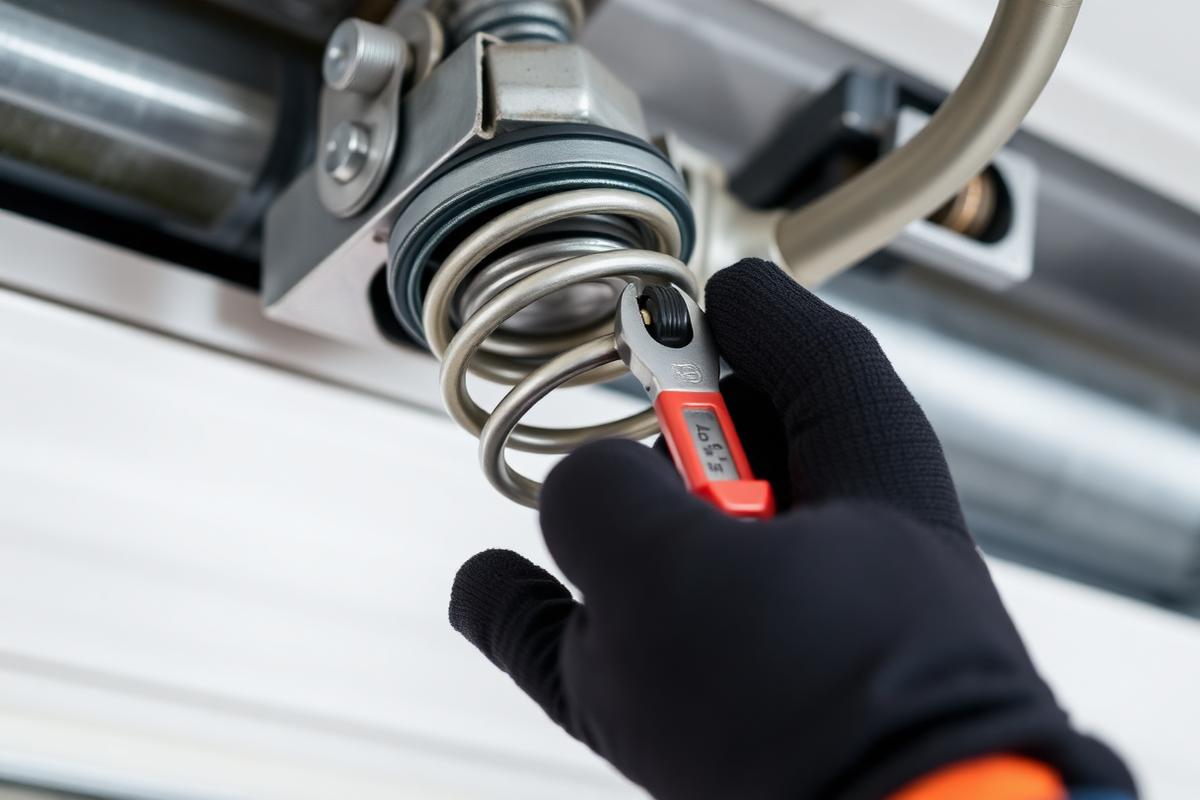
A torsion spring is a tightly wound piece of oil-tempered steel mounted on a shaft above your door. Every time the door opens or closes, the coils unwind and rewind. Each of those movements is called a cycle.
Cycle life is the honest answer
Standard springs are rated at about 10,000 cycles. A busy Naples household — two vehicles, teenagers, groceries — averages 4-6 cycles a day. Do the math and you get 5-7 years before the metal is fatigued to failure.
Humidity and salt air accelerate it
Micro-corrosion on the surface of the coil creates stress concentrations. Under load, cracks propagate from those spots. This is why Naples springs almost always fail faster than the same spring in a Denver garage.
How to buy extra life
The single best move is to upgrade to a high-cycle spring rated for 20,000+ cycles, then keep it clean and lightly lubricated with a garage-door-specific silicone spray twice a year.
- Ask for high-cycle springs on your next replacement
- Lubricate springs with silicone-based garage door lubricant every 6 months
- Have a professional balance-check every year
- Never spray WD-40 on springs — it strips protective oil